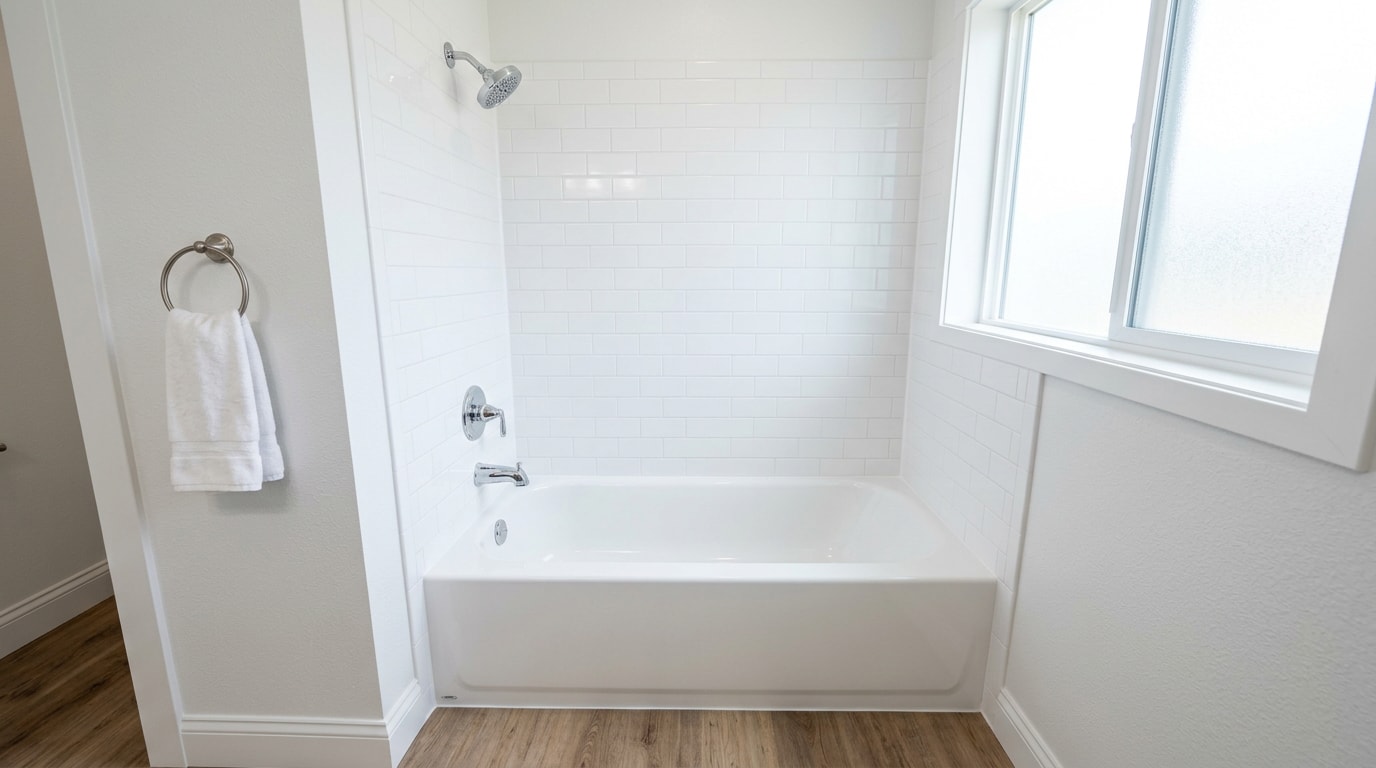
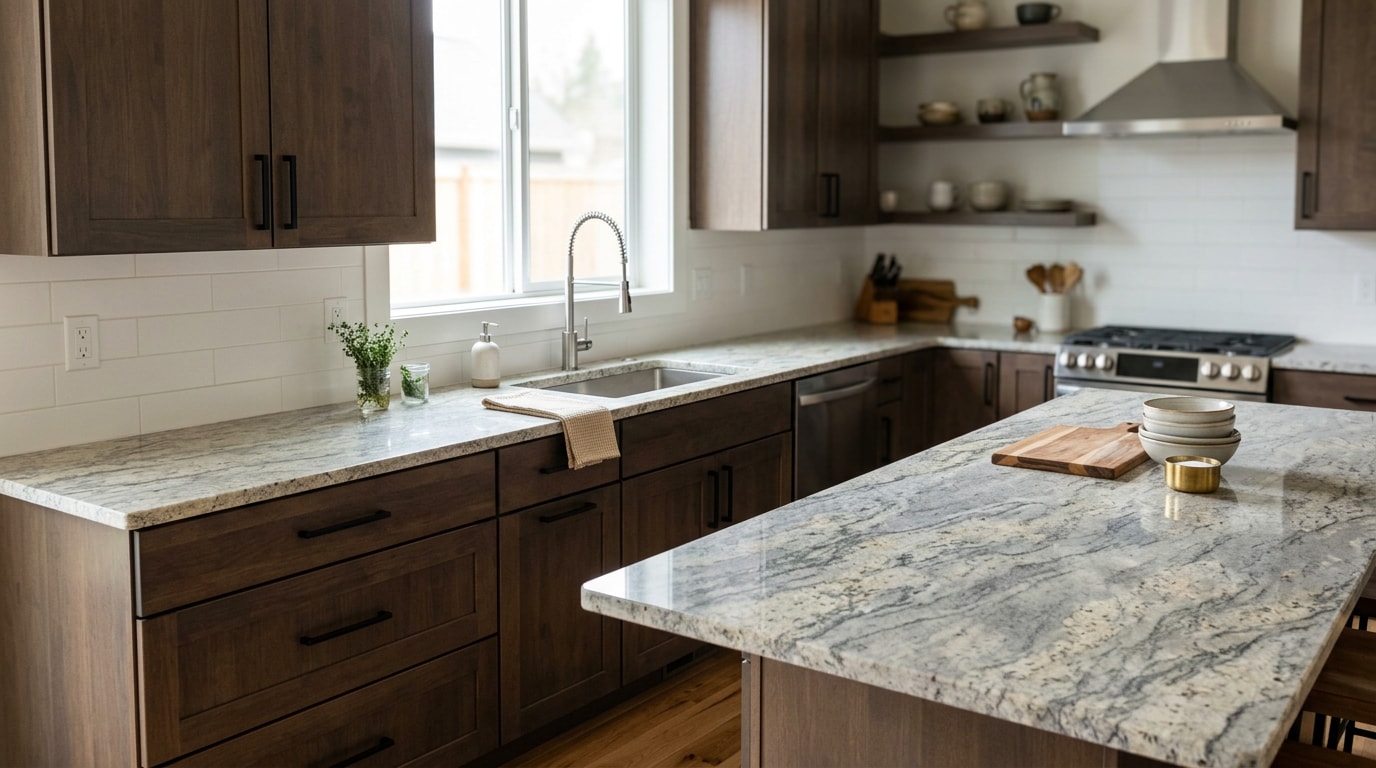
Installing granite countertops in Tacoma, WA means balancing slab cost, fabrication timeline, and finding an installer who can template an old cabinet box without a seam gap. Granite is still one of the most requested kitchen and bathroom upgrades across the South Sound. Here's what actually drives the price and the process, before you book a measurement appointment.
Cost to Install Granite Countertops in Tacoma, WA (2026)
Granite pricing depends on slab grade, square footage, edge treatment, and cutouts. Two kitchens of similar size can land at very different price points depending on these factors alone.
A few things move the number up or down more than anything else:
- Slab grade and rarity. Standard commercial colors cost far less than imported or exotic slabs.
- Square footage and layout. Islands, peninsulas, and multiple seams add material and labor.
- Edge profile. A simple eased edge costs less than ogee or waterfall edges.
- Cutouts. Sink, cooktop, and outlet cutouts are typically billed separately from the base slab price.
- Removal and disposal. Tearing out an old laminate or tile counter adds to the labor line.
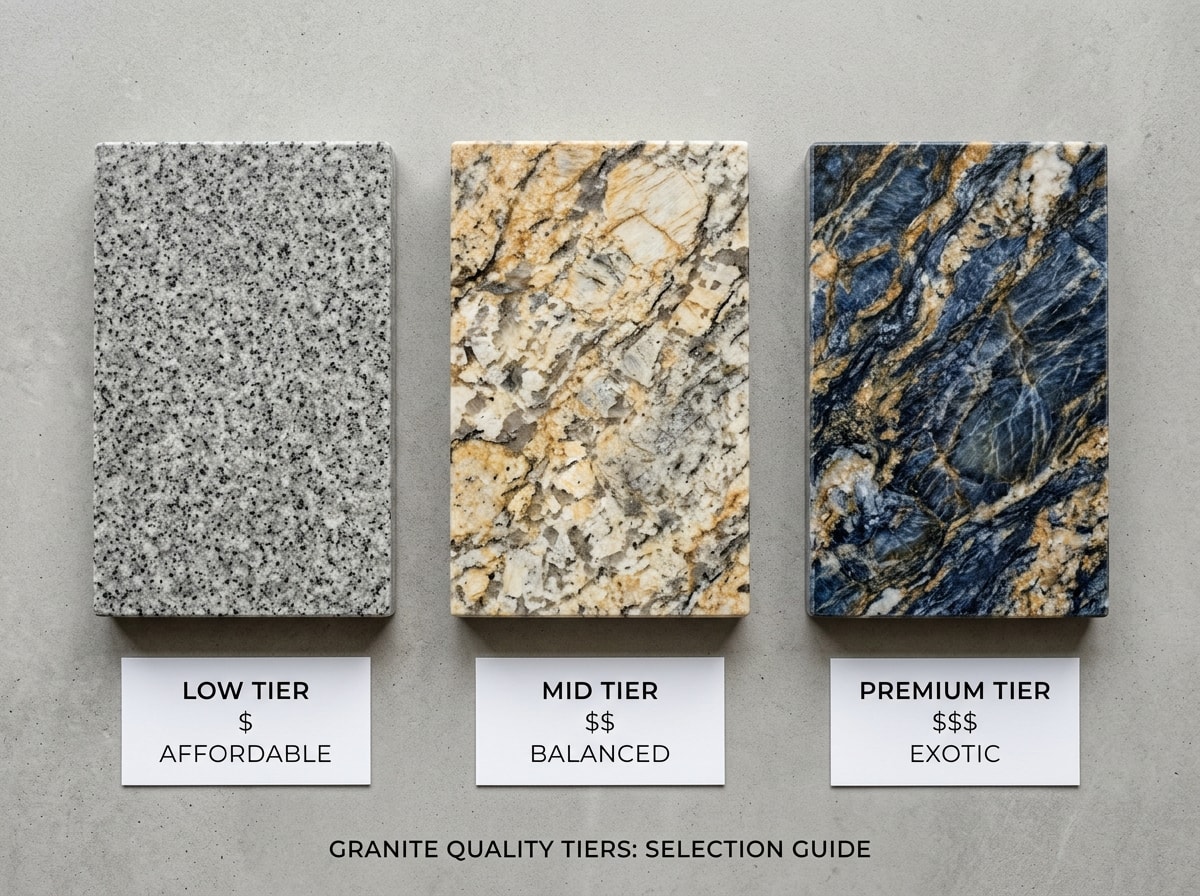
Replacing existing countertops with new granite usually ranges from $2,000 to $4,500 for most homes, with larger or more complex installations exceeding $5,000. Price per square foot runs roughly $40 to $75 for standard granite types, and an average-sized kitchen costs about $3,500 installed. Rare, highly figured granite slabs can run as high as $500 per square foot.
| Tier | Price per Sq Ft | Full Kitchen Total |
|---|---|---|
| Low (standard colors) | $40–$50 | $2,000–$3,000 |
| Mid (popular patterns) | $50–$65 | $3,200–$4,500 |
| Premium (exotic/rare slabs) | $75–$500 | $5,000+ |
Installation and labor typically run around 22% of material cost, with sink and cooktop cutouts, plus edge profile work, billed separately. Smaller repairs, such as chip fixes or edge replacements, usually cost between $250 and $600, depending on material and scope.
Ready to get exact numbers for your kitchen? Request a free estimate and we'll measure your space, walk you through slab options, and give you a written quote before any work starts. If your project also includes new cabinetry or flooring, our kitchen countertop installation team can scope the whole job in one visit.
How Granite Countertop Installation Works, From Measurement to Final Fit
A good countertop installation starts with accurate measurements, material guidance, and a plan for seams, edges, sinks, and surrounding finishes. That planning stage is what lets homeowners replace worn surfaces with tops that genuinely fit the room, instead of slabs that look close but don't quite align with cabinets or appliances.
Measuring and Calculating Square Footage
Before fabrication, the installer measures every run of cabinet, including L-shapes, islands, and backsplash returns. A rough formula homeowners can use to estimate material needs: multiply the length by the depth of each counter run in inches, divide by 144 to get square feet, then add roughly 10% for waste and seam overlap. Standard overhang beyond the cabinet face runs 1 to 1.5 inches for comfortable standing clearance. Final numbers always come from an in-person digital template, not a tape measure estimate, since cabinet boxes are rarely perfectly square.
Fabricate & Install
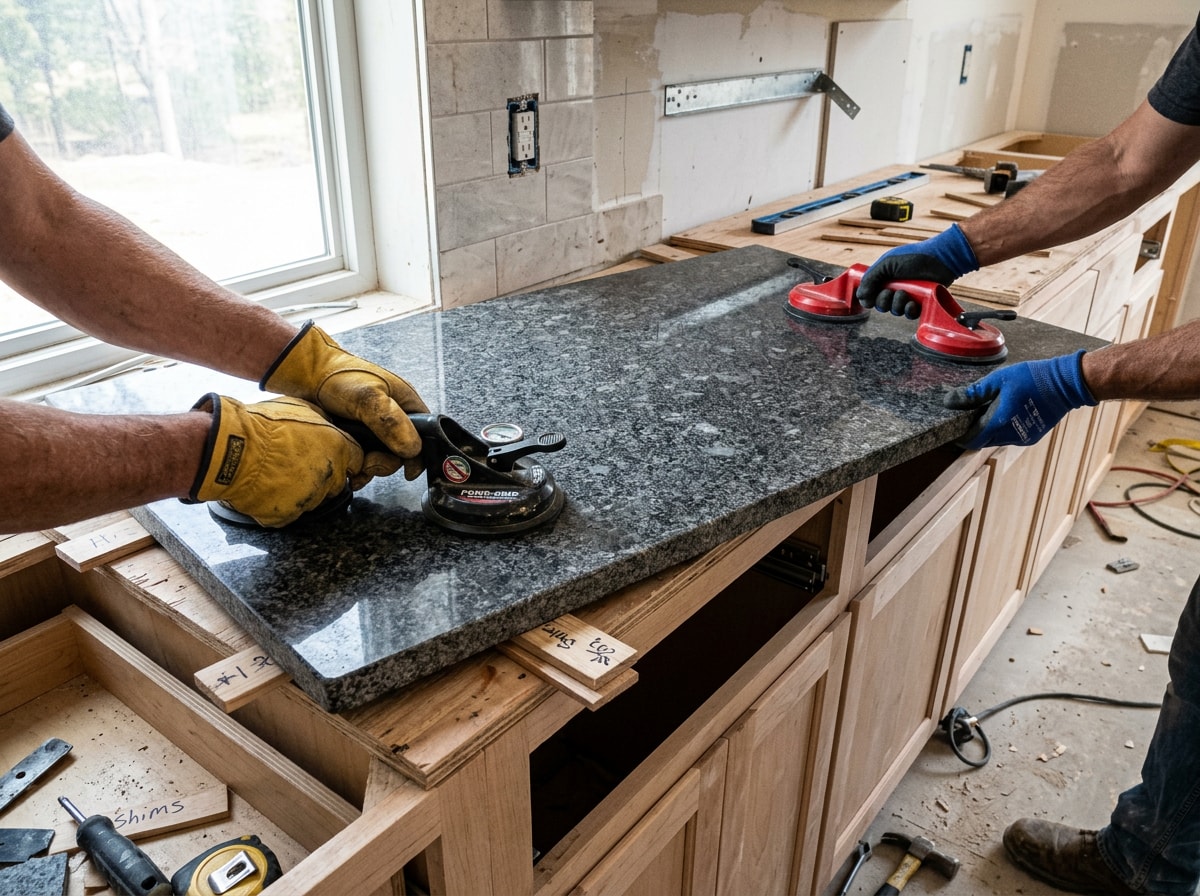
Once templating is complete, the slab goes to the fabrication shop, where it's cut to match the exact dimensions of your space. The fabricator cuts sink openings, shapes the chosen edge profile, and polishes the stone before it ever leaves the shop. On install day, the finished piece is set, leveled, and secured with attention to seam alignment and a clean finish around backsplashes and appliances.
This sequence stays largely the same whether the project is a full kitchen remodel, a bathroom vanity replacement, or a countertop installed as part of new construction. If your scope also touches tub or shower surfaces, see how a related project played out in our bathroom countertop replacement guide.
Cutout and Seam Planning
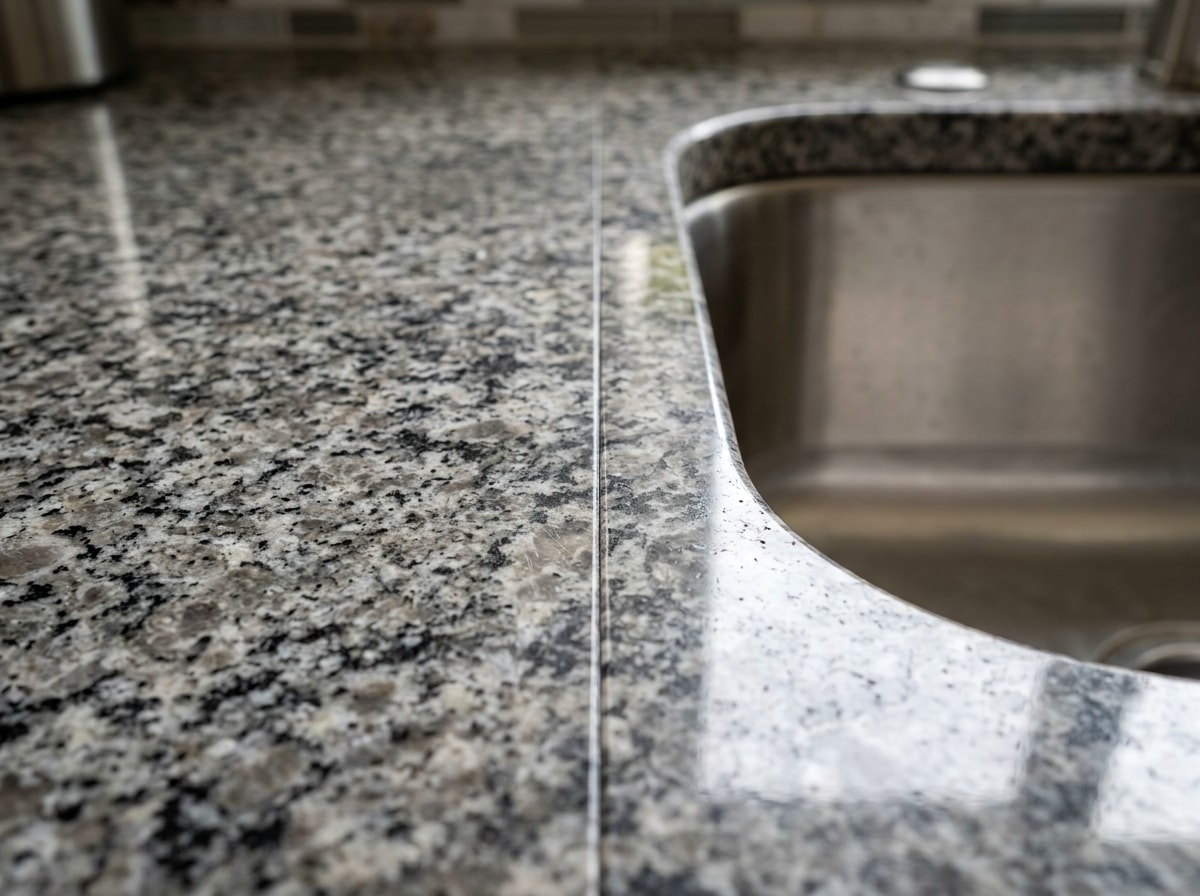
Seam placement, sink cutouts, and edge profile decisions all need to be finalized before the slab is cut, since granite can't be reshaped once fabrication is done. Planning for seams, edges, sinks, and surrounding finishes is what separates a clean, nearly invisible seam line from one that catches dust and looks mismatched over time.
Cutting and polishing stone also generates respirable crystalline silica dust, a byproduct found naturally in quartz, cristobalite, and tridymite . Installers are required to control it with wet-cutting methods, ventilation, or approved respiratory protection. Federal workplace rules limit worker exposure to a Permissible Exposure Limit (PEL) of 50 µg/m3 as an 8-hour time-weighted average , which the Occupational Safety and Health Administration enforces at fabrication shops and job sites alike. A reputable fabricator should be able to describe their dust-control process without hesitation.
Why Choose a Professional Installer for Granite Countertops
Granite slabs are heavy, brittle under uneven pressure, and unforgiving of small measurement errors. DIY or inexperienced installation risks cracked slabs, misaligned seams, and voided manufacturer warranties, problems that cost far more to fix than the installation would have cost upfront. A qualified, insured team brings the right lifting equipment, templating tools, and fabrication experience to avoid those outcomes.
Tacoma-Area Installation Considerations
Tacoma's housing stock varies widely, from older bungalows with settled, out-of-level cabinets to newer builds with square cabinet boxes, and that variation matters once a slab shows up on install day. In homes built before the 1960s in neighborhoods we serve regularly throughout Tacoma, WA, we routinely find cabinet bases that have shifted a quarter-inch or more over decades, which means extra shimming and leveling compound before the slab ever gets set. Seasonal humidity swings can also affect how cabinets and substrates sit beneath the stone.
Homeowners researching a professional countertop installer in the area should ask how the company handles older cabinet bases specifically, since that's where many installation issues originate. You can see examples of recent work, including seam placement and edge details, on our completed projects page.
Benefits of Granite Countertops
Granite remains a top choice for Tacoma kitchens largely because of how it performs day to day, not just how it looks on a showroom slab. Two benefits come up most often: how tough the surface is, and how little upkeep it demands compared with some other materials.
Durability
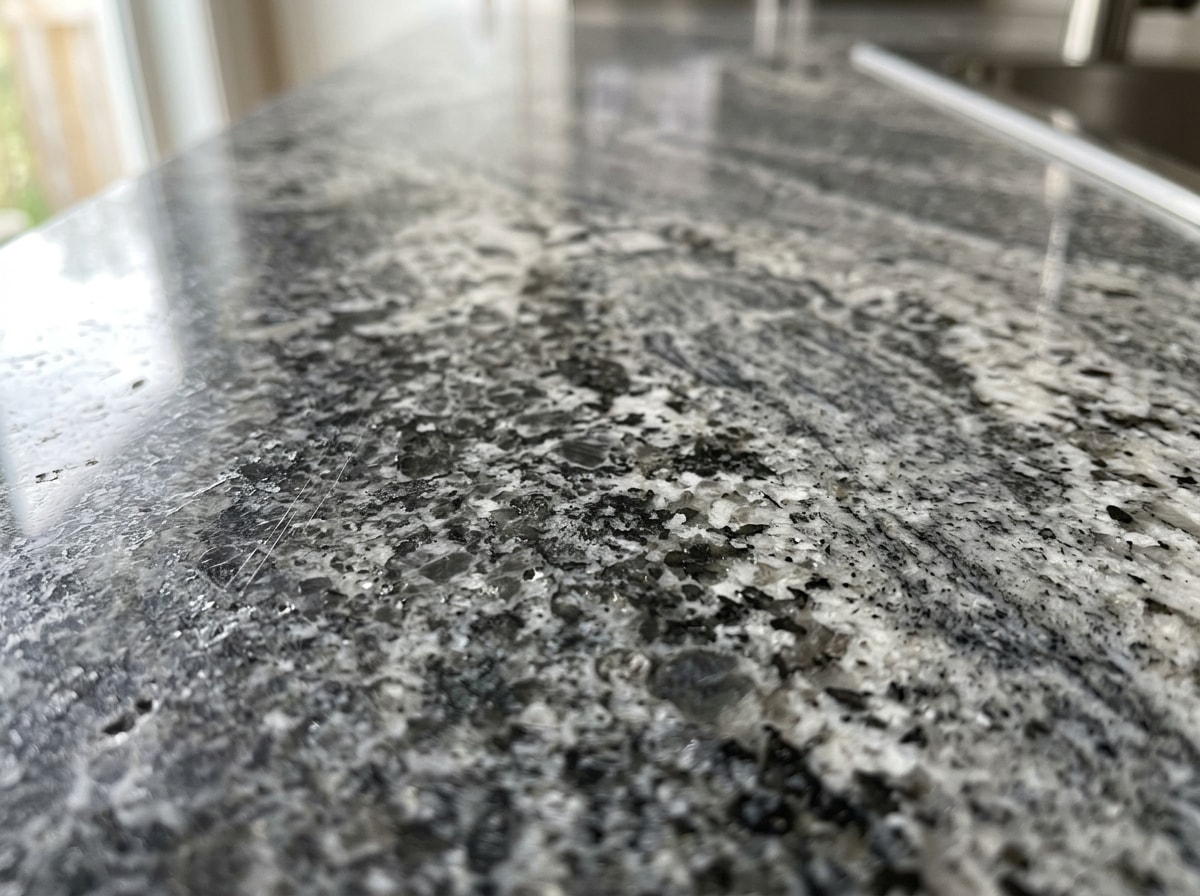
Granite is one of the strongest and most durable natural stones used in countertops, which makes it well-suited to high-traffic kitchens. The hardness of the minerals in most granite surpasses that of the utensils used on it, which is why the surface resists scratching so well . Granite is typically heat resistant up to roughly 480°F, though direct contact with a hot pan over time can still cause thermal cracking , so trivets are still worth using. Granite has been a building material for thousands of years, and its name comes from the Latin word for grain, a reference to the visible grains of quartz and feldspar that make up the stone , according to the U.S. Geological Survey.
Easy Maintenance
Granite is non-porous once properly sealed, meaning it resists absorbing liquids and is generally easy to wipe clean after everyday cooking spills. Regular sealing helps maintain that barrier and can extend the life and appearance of the stone over many years. Most granite countertop maintenance routines come down to mild soap, a soft cloth, and reapplying sealer on a schedule your fabricator recommends. For a broader look at how countertop and cabinet work fits into a full kitchen overhaul, visit our kitchen remodeling services page.
FAQ
How Long Does Granite Countertop Installation Take, and Is Sealing Required?
Installation typically takes one to two days once fabrication is complete. Measuring and templating happen first, then the slab is cut off-site before a final install visit. Sealing is required for granite to protect its surface, since granite is porous enough to need that protective layer, while quartz is often easier to maintain because it resists staining and usually skips sealing altogether.
What Types of Granite Countertops Are Available?
Granite comes in a wide range of colors and patterns suited to different styles. Bianco Antico, for example, is white with pink and grey patches, which works well in traditional or rustic kitchens looking for a warm interior. Local contractors can typically offer a variety of granite colors, patterns, and finishes so the slab matches your home's existing style rather than forcing a compromise.
Which Countertop Material Is Easiest to Maintain in a Busy Kitchen?
For households prioritizing low maintenance above all else, quartz tends to have a slight edge: it resists staining and usually doesn't need sealing at all. Granite is still highly durable and performs well in busy kitchens, but it benefits from periodic sealing and somewhat more material-specific care than engineered quartz. The right choice often comes down to whether you're willing to trade a small amount of upkeep for granite's natural stone appearance.
How Do I Calculate How Much Granite I Need?
Measure the length and depth of each counter run in inches, multiply them together, then divide by 144 to convert to square feet. Add roughly 10% on top for seams, waste, and overhang. This gives you a ballpark for budgeting, but a fabricator still needs to do an in-person digital template before cutting, since no two kitchens are perfectly square.
Can I Install Granite Countertops Myself?
Technically yes, but it's rarely a good idea. A single kitchen slab can weigh several hundred pounds, and a crack during handling isn't repairable. Most manufacturer warranties on sinks and some sealants also assume professional installation. Unless you have slab-handling equipment and templating experience, the labor savings usually aren't worth the risk of a cracked top or a misaligned seam.
Do Granite Countertops Emit Radon or Radiation?
This comes up often enough to address directly. The EPA has said current data is insufficient to conclude that the types of granite commonly used in countertops are significantly increasing indoor radon levels in homes. Soil beneath a house remains the primary source of indoor radon, not a kitchen countertop.
---
Superior Tile and Remodel LLC is a licensed, bonded, and insured remodeling contractor serving Tacoma and the greater South Sound, including Pierce County, King County, Gig Harbor, and Olympia. Our installers template granite, quartz, and tile projects in person on every job, which is why we can speak specifically to how older Tacoma cabinet bases behave on install day. Visit our homepage to see our full range of kitchen and bathroom services, or contact us to schedule a free, no-pressure estimate.